Posts

Showing posts with the label pelvic health

Nia - a refreshingly freeing movement class!
Image
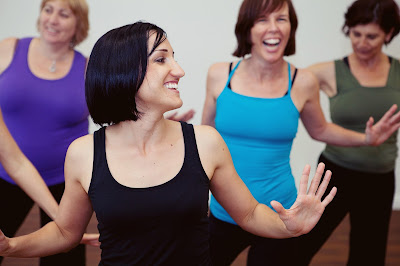
Photographs used with permission of Mandi Cavallaro This week I participated in a Nia class in Brisbane. Going in I didn't really know what to expect, except that it was done barefoot (sign me up!) but I'm so glad I went!  The best way I can describe it is simply freedom of  movement to beautiful music. The teacher guides you through the moves but there is really no strict focus on technique other than to let your body just feel the music and to do what feels right, exploring all of the motions that are available to you. I felt a little self-conscious initially but I honestly had a smile on my face the entire time and soon enough felt very relaxed and free.  This is me doing some Nia inspired moves on the balcony of the gorgeous place we are currently house-sitting! As someone who loves music and whole body movement, I have often thought about looking for a local dance studio, but since I really have no dance training (and not always the best coordinatio...

Hello Brisbane!

Image
WOW time flies! It has been a crazy year and I have been rather slack on the blogging front so I thought I'd give a quick update on what I've been up to over the last few months.  This Pelvic Health Physio has said a farewell (for now) to Canada and a big HELLO AGAIN to Brisbane, Australia!! My hubby and I taking the CityCat tour of Brisbane Between May and August, my Canadian work visa ran out, I wrote (and am still writing) a book, I sold most of my worldly possessions,   got married (yay!), packed my life into a few suitcases, moved to Australia, popped over to Bali for a honeymoon, and am now settling back into Brisbane life with my new husband. So if you or anyone you know is in the Brisbane area, feel free to drop me an email info@bodyandbirthphysio.com or pop in and visit to say 'hi' or chat anything Pelvic Health Physio or Restorative Exercise! You can also visit my new website: www.bodyandbirthphysio.com   Before I sign off, however, I d...

Healthy Feet, Healthy Pelvic Floor

Image
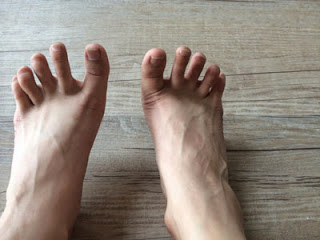
Historically, pelvic floor treatment has focused solely on the pelvic floor muscles. We now know that in order to have an optimally functioning pelvic floor, we have to look at the bigger picture - the entire body starting from the feet up.  The feet are particularly important because whatever happens at ground level determines the forces and load affecting the body all the way up to your neck. Many women that I have seen for pelvic floor dysfunction also have a foot problem of some kind, the most common being bunions. The two conditions, although not physically close, have some similar contributing factors and continue to feed into one another due to tension patterns running from the feet, the back of the legs and up to the pelvis. The biomechanics that contribute to foot issues, also contribute to changes in positioning and muscle action at the pelvis.  Bunions Bones respond to   load   or   pressure . The more pressure applied to a particular part of...

Yoga and Pelvic Health

Image
Erin, Leah and myself working hard at the clinic This week I went to a yoga class for the first time in a long while. It was awesome! And very challenging.  In Grade 9 or 10 at school, I was getting disheartened by being one of the slower swimmers in my training squad. I told my Dad I didn't want to go anymore because I was the slowest and he said 'Well how are you going to get any better if you don't go'. I figured this made pretty good sense, so I kept at it, set some PBs, and his words have stuck with me ever since.  So for those who say they 'just aren't flexible' and 'never have been', how are you going to get any more flexible if you never do anything about it. Yoga isn't about being better than any one else in the class. It is simply a guided practice that you do for yourself. Pelvic floor dysfunction is often related to the lack of pelvic movement in our daily repertoire of positions (sitting in chairs, standing, walking a...

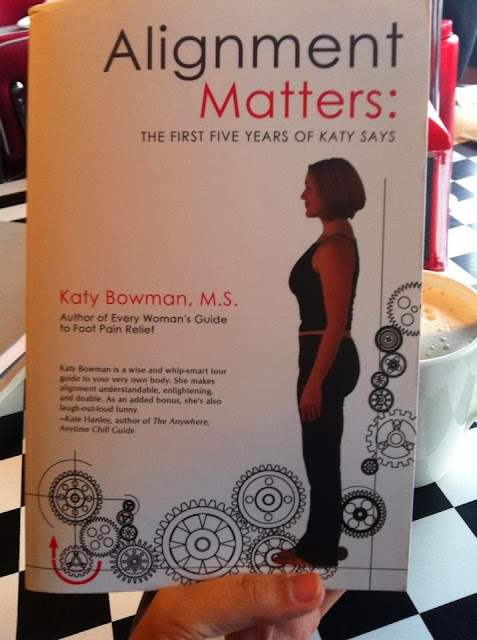
You should read this book! Alignment Matters

Image
Today's post is slightly different to most of the others. I've never written a book review before (outside of primary school), however I just had to share this particular one with you. Recently I was lucky enough to get my own copy of... Alignment Matters by Katy Bowman! My first impression was: Oh my gosh this woman is smart! If you've never heard of her, Katy Bowman is a biomechanist from the USA and teaches thousands of people easy ways to look after their body and keep it functioning the way that it should. I love this book from a Physio perspective as there is a huge focus on prevention of injury and maintaing (or gaining) whole body wellness. The information throughout the book is very well researched but also easy to read for people with lots or little health education. The book is a collection of the first five years of her blog, organised into relevant categories and body parts with each gem of knowledge presented in short chapters. Great if you don...

Urge Urinary Incontinence and Overactive Bladder

Image
Urge and Stress Incontinence are quite different although they can often occur together. What is it? Urge Incontinence is a symptom of Overactive Bladder (OAB) which is the overly frequent contractions of the detrusor muscle which forms the muscular wall of the bladder. This occurs even when the bladder is not full and can be in response to certain triggers, for example warm water, getting home from an outing (key-in-the-door syndrome), and different foods.  It can also make you feel like you need to go to the washroom every 20 minutes but when you do, there's not a whole lot to empty.  OAB does not always cause leaking, however it can lead to urge incontinence if you are unable to make it to the washroom on time. Particularly if you do not have adequate pelvic floor muscle strength.  While it sounds annoying at the most, it can have a significant impact on your lifestyle as you are constantly worried about where the closest bathroom is. When it becomes more s...

Stress Urinary Incontinence

Image
Stress Urinary Incontinence (SUI) is the involuntary leaking of urine and one of the most common and easily cured reasons for urinary leaking.  What is it? In essence, it is due to physical stress or external pressure on the bladder with increased pressure in the abdomen. For example, laughing, coughing, sneezing and lifting all involve strong abdominal contractions that place significant pressure on the bladder. Running, changing directions quickly and jumping all involve higher impact and displacement of the bladder with similar results. Leaking occurs when the muscles of the pelvic floor are not able to react appropriately to close off the urethra and thus allows urine to escape.  What are the causes? Most often it is caused by dysfunction of the pelvic floor muscles which can be from any of the risk factors discussed in this post "Everyday things that can put your pelvic floor at risk" :  Most notably:  Excessive straining with bowel movements or on...

Urinary Incontinence is no laughing matter.

Image
Now that we've had a look at some easy changes you can make to protect your pelvic health, lets look at some of the conditions you will be preventing. For those who are experiencing some of these conditions, I will provide some reliable information on what it actually is, reasons why these problems may be occurring, as well as options for treatment. I'm starting with urinary incontinence because it is very, very common. Increasingly so in a younger population, often after childbirth but not necessarily. It is one of the leading causes for admission of older people (not just women) into nursing homes and can cost a small fortune to manage using pads. And while I am glad that awareness of adult incontinence is increasing thanks to television advertisements for adult diapers, I do not agree with their message that leaking is just something to put up with.  If you only take away one message from this post, let it be this: Urinary incontinence, regardless of whether ...

Start making positive changes! 5 ways to get more movement into your day.

Image
So in a previous post we looked at things you can change to help decrease your risk of pelvic floor dysfunction. Here are a few achievable ways to get more movement into your day! 1. Pomodoro Technique Now, I know a lot of people have jobs that require them to be sitting for 8 or more hours a day, obviously not ideal for the human body. Recently I was introduced to the Pomodoro technique by a friend (Pomodoro meaning tomato in Italian). It is based on the idea that frequent breaks during your work day, a 3-5 minute break every 25 minutes, can help improve productivity and efficiency. I love this idea, not only because it gives your brain a rest, but also your body. You can also use this time to give your muscles a break. Stand up, stretch and wake up all your postural muscles, including your pelvic floor! Check it out!  2. Change up your work space If possible, see if you arrange your work set up to be standing instead of sitting (or alternate between the two).  Another ...

Behind closed doors... What does a Pelvic Health Physiotherapy consultation involve?

Image
I am going to start by letting you know that pretty much everyone is nervous before their first Pelvic Health Physio visit. However , most people leave saying "Well, that wasn't nearly as bad as I expected!" As we are physiotherapists first and foremost, the structure of the visit is similar to an orthopaedic or musculoskeletal visit with the main difference being that it is in a private room.  The visit begins with taking a detailed history of your current symptoms and past history of injury or pregnancies, your pain and/or bladder and bowel habits. This is then followed by a biomechanical assessment of your lower back, pelvic and hip movements.  As the patient, you are in control of the entire treatment and do not have to give any more information or undergo any assessment unless you are comfortable with it. Both of these parts are important as they help to give us clues about the possible underlying causes of your symptoms. It also allows you to become more co...